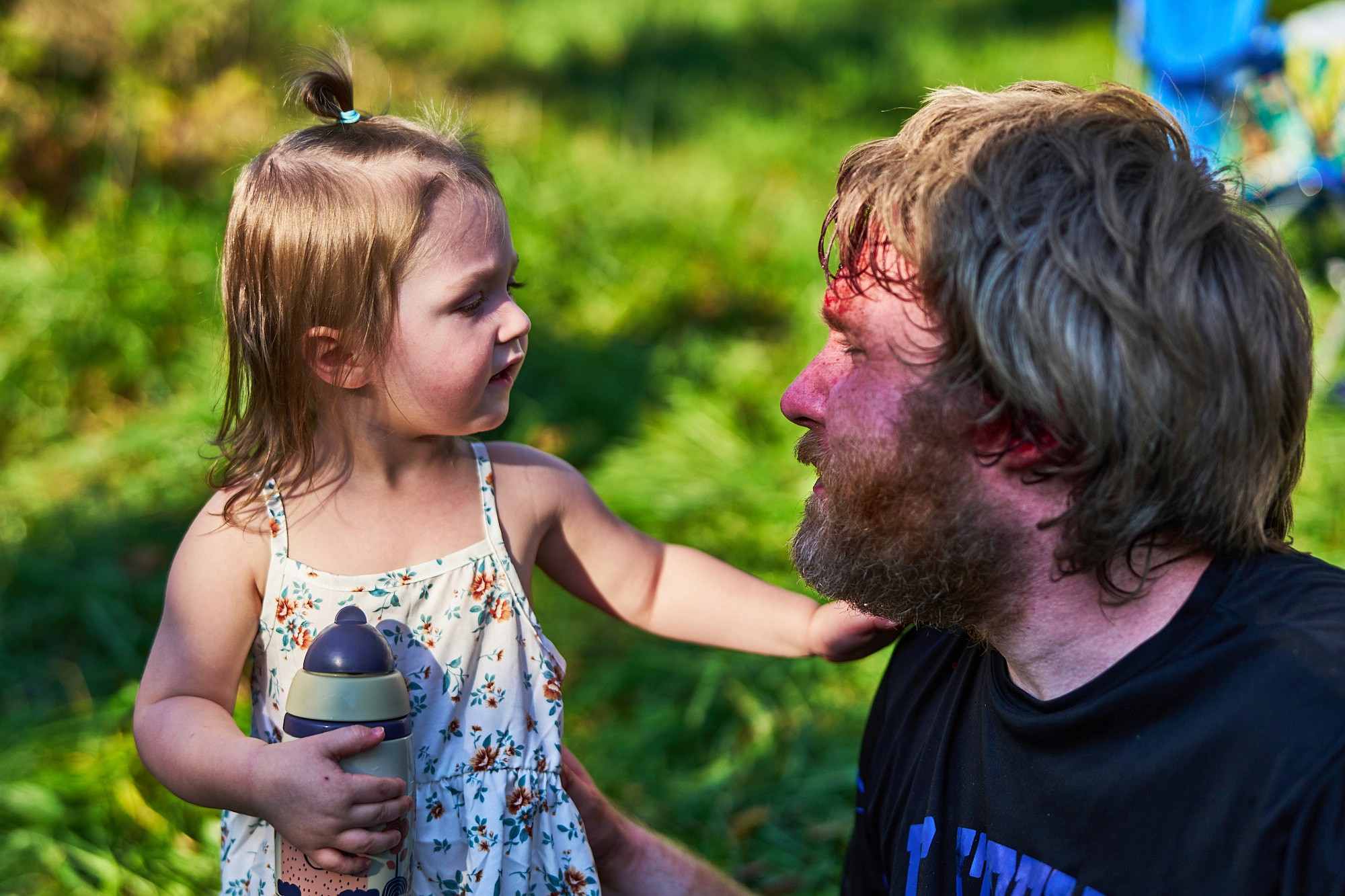
Finding the Story Beneath the Blood:

The Art & Community of Deathmatch Wrestling

This project is about following curiosity past the shocking surface. It’s about what emerges when you look deeper than the gore and try to understand why. It’s about the people who choose this life—the scars they wear with pride, the complex stories they tell through violence, and the unlikely family they build together. What I found broke my conventional understanding of wrestling into a deeper, more thoughtful understanding of performance art, trauma, and community.

0:00/1:34

Rusty Blackwell "The Backwoods Butcher"


0:00/1:34

It began with an assignment to photograph sports, not with a fascination for violence, but with a simple desire: to document something unique, to capture something beyond the familiar stadiums and repetitive plays. My search led me away from the mainstream and into the world of professional wrestling. I found a realm with a massive contrast between in-ring personas and real-life people, which I found fascinating.

It was at an independent show that the true direction revealed itself. Meeting performers like "Hardcore" Dick Greco and Will Carroll, "The Outsider” shifted my focus entirely. I learned about deathmatch, I traveled, often across state lines, with the wrestlers, and I started to learn about deathmatch.

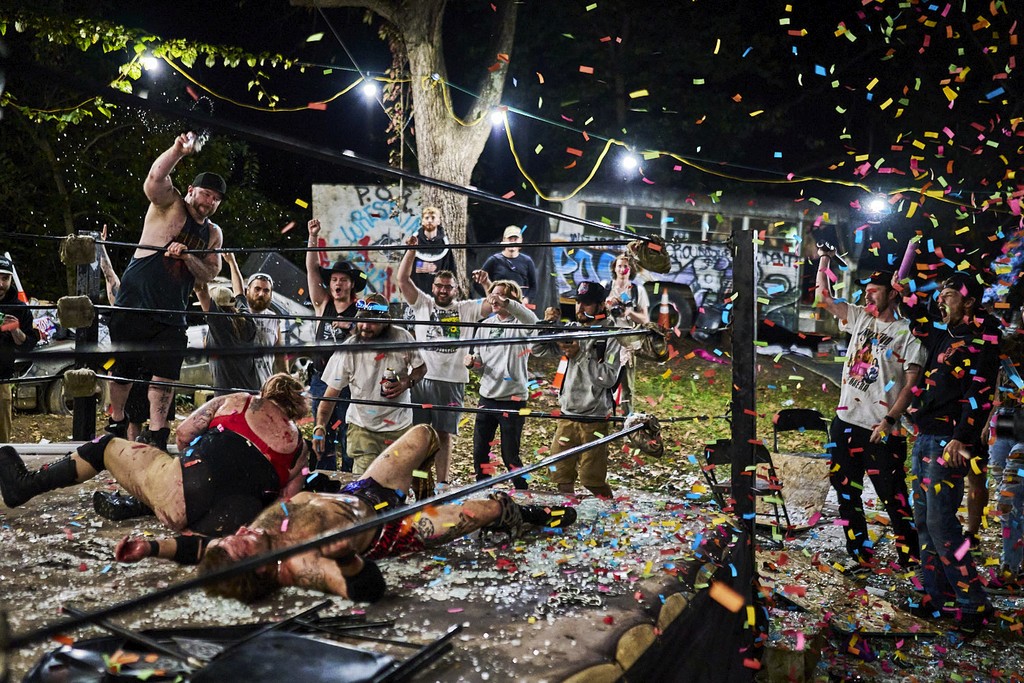
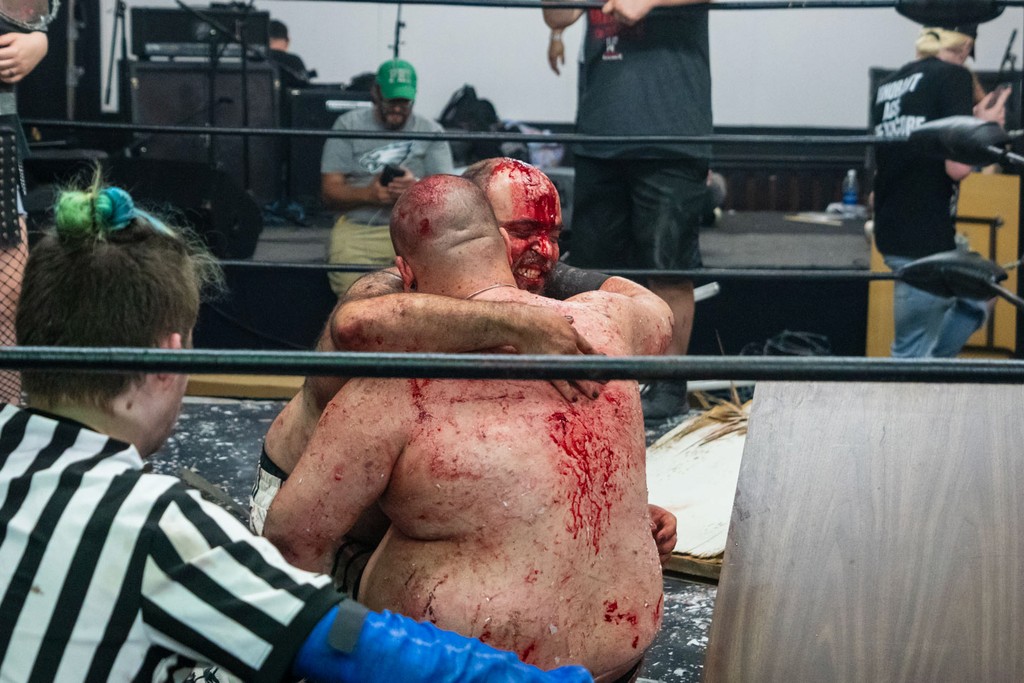
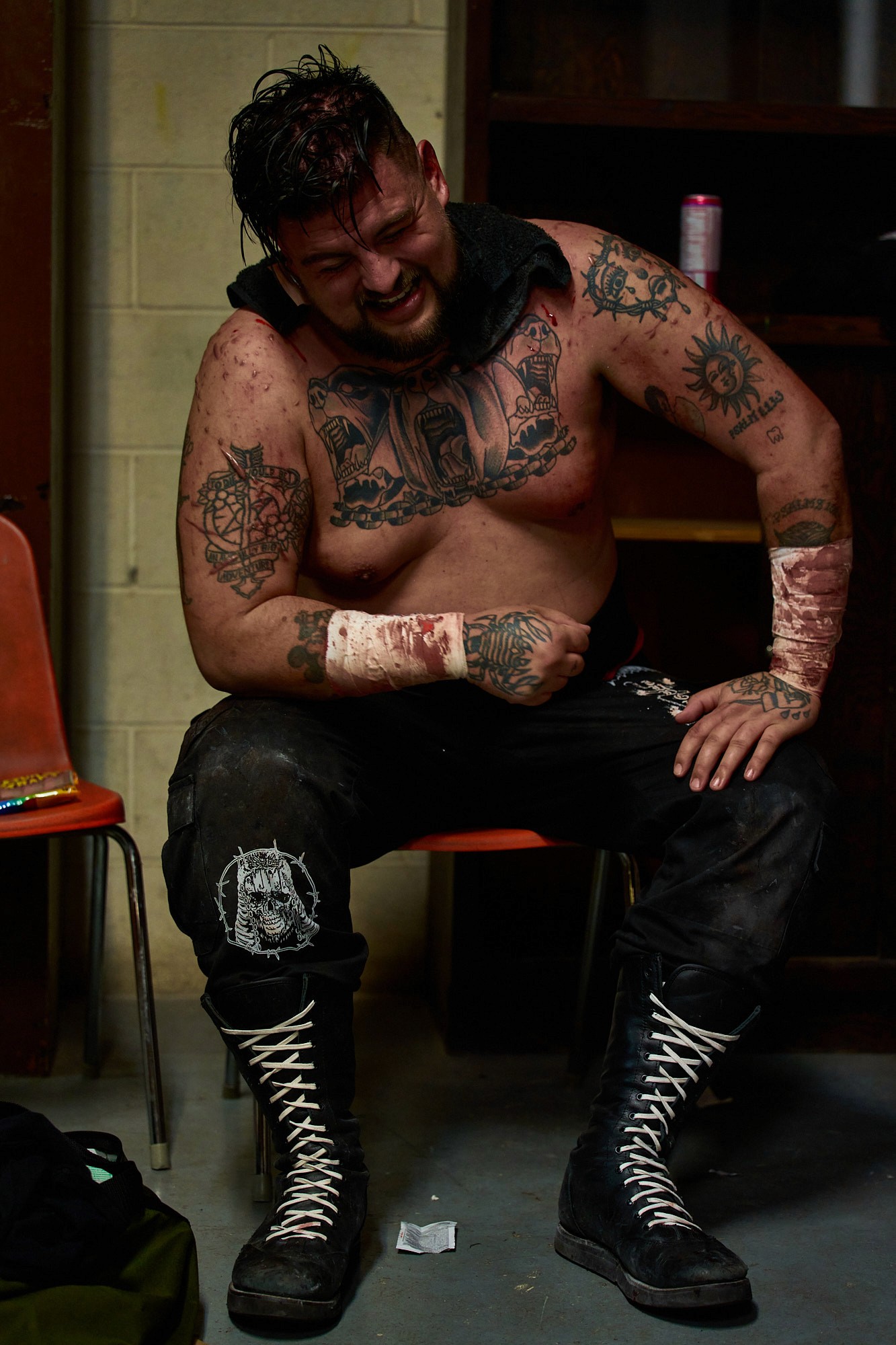
Deathmatch is undeniably one of the most brutal forms of performance art. At its heart, it taps into the oldest story: good versus evil. But where traditional wrestling often implies violence, deathmatch is real violence. Razor blades, thumbtacks, barbed wire, and shattered fluorescent light tubes are the tools of a unique, unflinching form of storytelling. As Will Carroll notes, the connection is undeniable: “The audience may not know what it’s like to be clotheslined, but they know what it’s like to step on glass. That’s why this violence connects.” The pain is relatable, the blood undeniably real, and it takes a very real toll on the body.
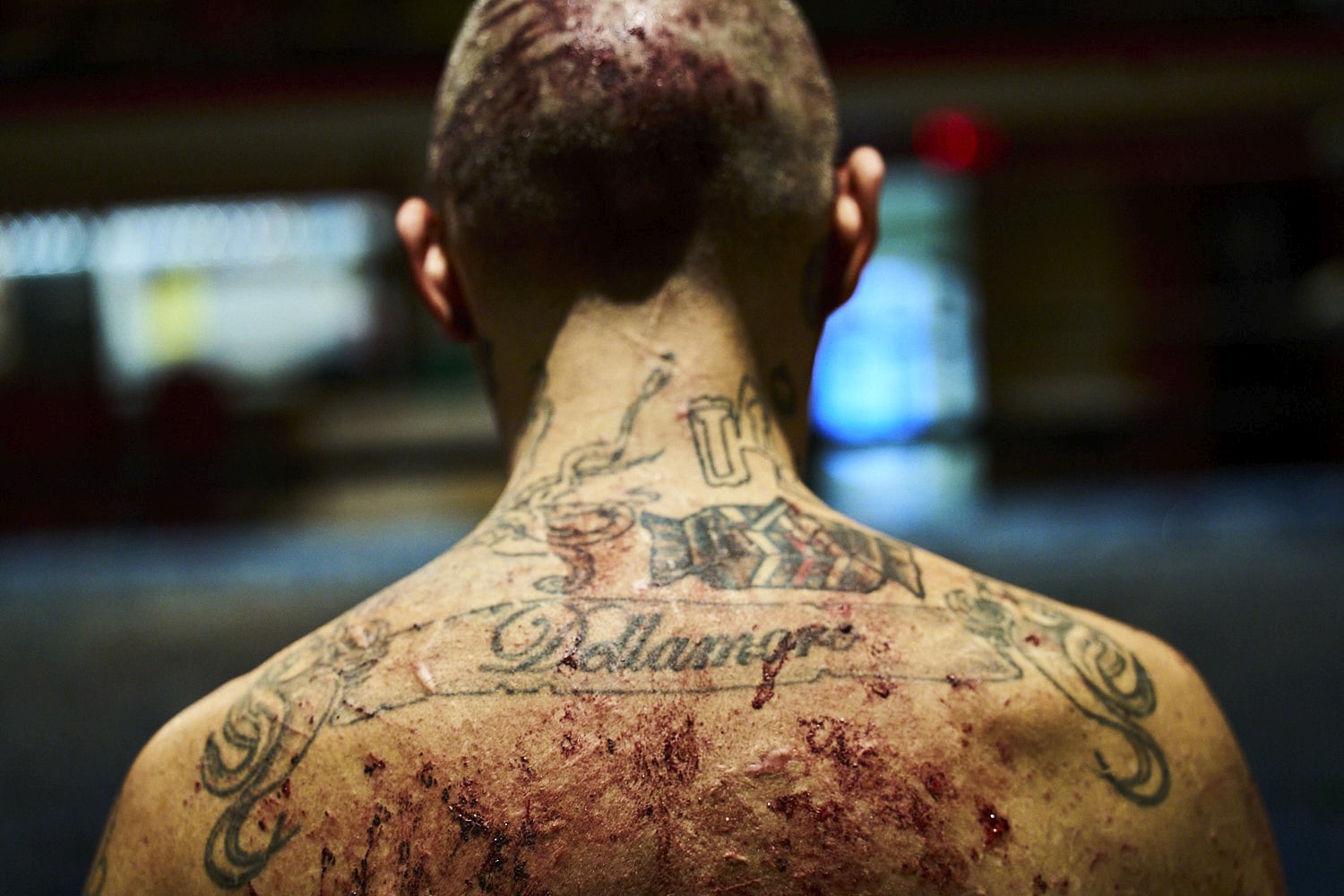
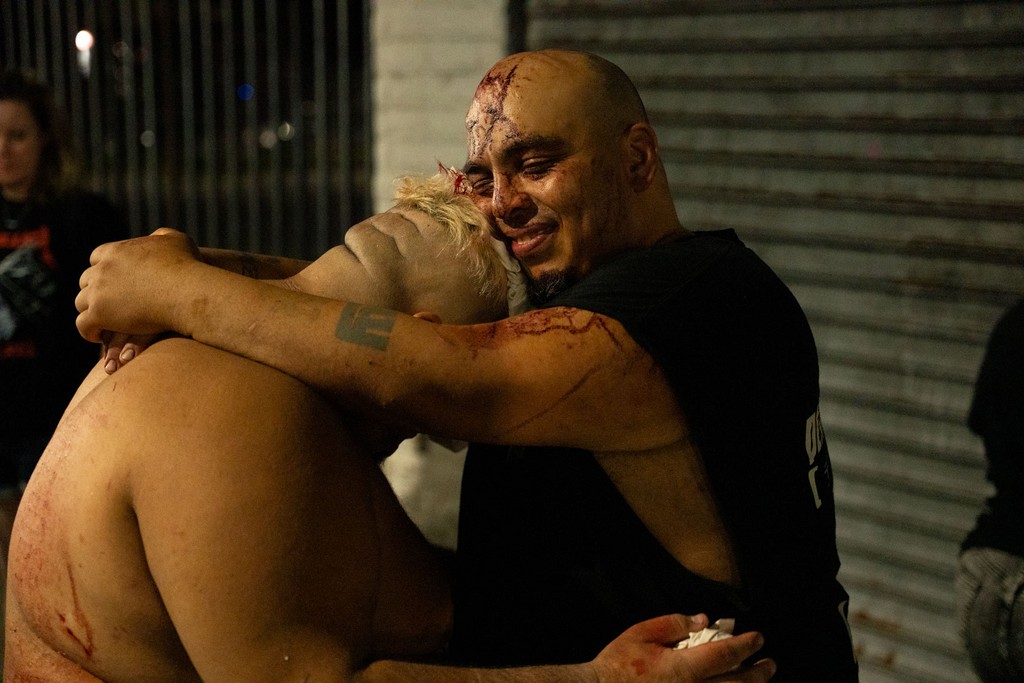
Yet, to stop at the gore is to miss the point entirely. Beneath the gore lies something far more profound: a community of resilience, driven by passion, artistry, and respect for the history of wrestling. For some wrestlers, this extreme performance is often more than just carnage; it can be therapy, catharsis, a ritualistic transformation of personal rage or pain into a shared experience, or a pursuit of a dream. I found a podcast interviewing deathmatch wrestler Michael Krueger where he talked about the link between art and a release similar to self-harm he experienced. This began to open the book for why people did deathmatch specifically. For the dedicated fans, it's a mirror reflecting their struggles, a space where pain is understood, where outsiders find a powerful sense of belonging, often for those who don't fit anywhere else.

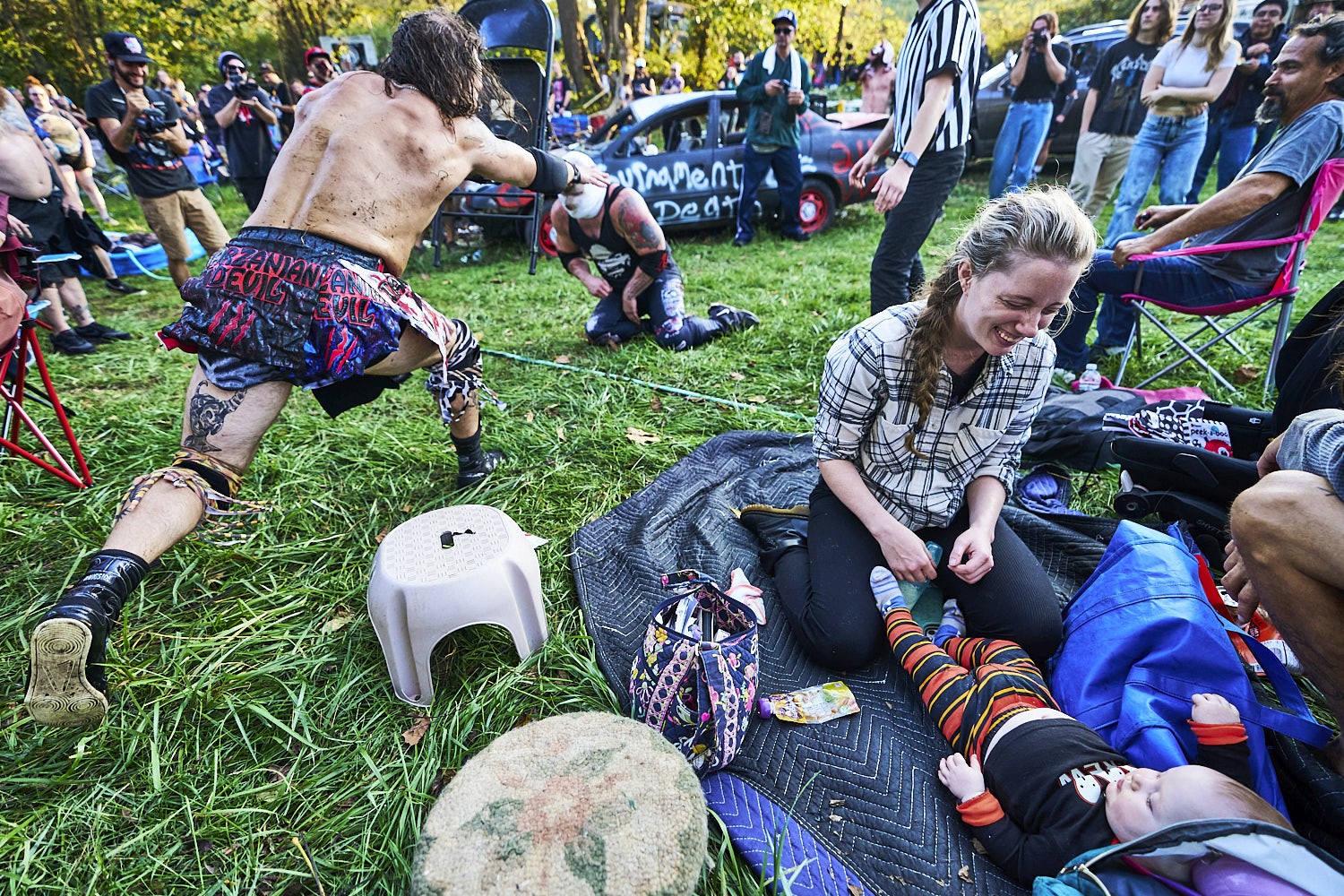
As Mama Liz puts it: “It’s more than just a sport, more than just wrestling—it’s an outlet, a brotherhood, a language. And a lot of times, it becomes family. A family of wrestling.” The ring is a place for those who feel they don’t fit neatly anywhere else. Bob Bradburn describes deathmatch as “An island of misfit toys.”  What my camera began capturing wasn't just gore and violence, but the intricate bonds of a community.

My work explores these spaces where pain transforms into purpose. Whether documenting the visceral world of deathmatch or the challenging paths of substance abuse recovery, I am consistently drawn to stories of reinvention—how individuals take their fractures and mold them into something different. I gravitate towards narratives of transformation. Life’s margins, I’ve found, are often where the most interesting stories bloom.

These wrestlers have reinforced a core belief: the most powerful stories aren't necessarily about the moments we break, but about the intricate, often painful, ways we put ourselves back together. They, like others I've documented, demonstrate how people remake themselves and find their community in unexpected places.

Thank you to all the wrestlers, fans, promotions, and families that let me into their lives, this would not be possible without y'all.